
What Is Hot Air Ballooning in Melbourne
My alarm went off at 4:17 AM in a freezing Southbank hotel room, and for twenty seconds I seriously questioned my life choices. Outside, the streetlights were buzzing against an empty Flinders Street, and the damp cold of early autumn was settling deep into the concrete. Most people who look up solid hot air balloon information before booking think they are just signing up for a scenic flight with a basket beneath a nylon canopy. What you are actually getting yourself into is a pre-dawn ritual that feels half like an expedition and half like quiet, low-altitude wandering over three-million sleeping suburbanites.
Melbourne is one of the only major metropolitan capitals on the planet where commercial hot air balloons are allowed to track directly over the city skyline. It shares that rare bragging right with places like Bristol and Albuquerque, though neither of those has the Yarra River curling through high-rise canyons quite like this. Floating quietly across Port Phillip Bay breezes while watching morning trams rumble onto the tracks is strange, peaceful, and surprisingly intimate.
Book your hot air balloon melbourne experience:
What is a hot air balloon and how does it fly over a major city?
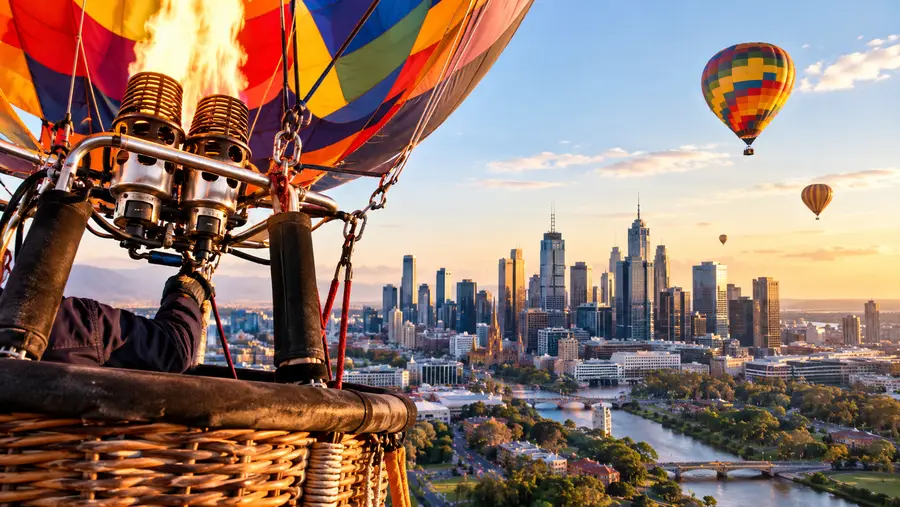
Stripped down to the bare mechanics, answering what is a hot air balloon comes down to elementary physics and a giant bag of ripstop nylon. You have the envelope, which holds thousands of cubic meters of heated air, a burner running on liquid propane, and a wicker basket built to absorb ground shock on touchdown. Warm air rises because it is lighter than the cold air around it. When the pilot pulls the blast valve, a blast of orange flame roaring at 120 decibels shoots upwards into the mouth, warming the trapped pocket and lifting the entire rig into the sky. It sounds simple until you realize there is no steering wheel, no rudder, and zero engine propulsion.
A pilot only controls vertical altitude. To go anywhere horizontally, they read wind layers at different heights, hopping up 300 feet to catch a slow drift southwest, or dropping down near the gum trees to slide back east. If you want to dive deeper into the physics and mechanical controls, our guide on how hot air balloon flights work in Melbourne breaks down the burner systems and airspace regulations in detail. Navigating Melbourne airspace requires extraordinary skill because commercial aircraft into Tullamarine and Moorabbin share the broader regional ceiling, meaning every single launch is plotted around tight, live air-traffic control windows.
The wicker basket itself has barely changed since the Montgolfier brothers took to the air in 1783. People expect high-tech carbon fiber or lightweight metal frames, but woven willow and rattan remain unmatched. They flex on impact. If a balloon comes down with a slight drag across an open grass reserve, the basket bends, cushions the passengers, and absorbs friction far better than rigid composite plastics.
Note: Melbourne city launch sites change every single morning based on raw wind directions at 4:00 AM. You will never know whether you are launching from Royal Park, Richmond, or Moorabbin until the pilot finishes assessing the early-hours pilot balloon.
Essential hot air balloon information on Melbourne routes and locations
When booking hot air balloon rides Melbourne operators will usually offer you a fundamental choice between drifting over the city CBD or floating through the Yarra Valley. Both options showcase very different personalities of Victoria, and picking between them depends on whether you prefer glass towers catching the first orange rays of sunrise or rolling vineyard mist breaking over mountain gums. If you are torn between the two terrains, reading through Melbourne City vs Yarra Valley balloon flights will give you a clear comparison of logistics, transport, and overall scenery.
City flights are dependent on very delicate wind speeds. If the breeze pushes too fast toward Port Phillip Bay, the launch gets scrubbed or shifted inland, because nobody wants a wet touchdown off St Kilda beach. Country flights out in the Yarra Valley, centered around towns like Yarra Glen, Dixons Creek, and Coldstream, deal with gentler valley breezes and wide-open landing paddocks. You spend an hour skimming over quiet farm dams, rows of pinot noir vines, and kangaroo mobs that scatter when the burner echoes across the valley floor.
| Flight Type | Average Altitude | Flight Duration | Meeting Location | Key Scenery |
|---|---|---|---|---|
| Melbourne City CBD | 1,500 to 3,000 feet | 50 - 65 minutes | Pullman Melbourne Albert Park | MCG, Yarra River, skyscrapers, Port Phillip Bay |
| Yarra Valley Country | 500 to 4,500 feet | 55 - 70 minutes | Balgownie Estate, Yarra Glen | Vineyards, Great Dividing Range, farm dams |
| Private Flight (2 pax) | Custom per conditions | 60 minutes | Selected on booking | Exclusive basket layout, custom flight path |
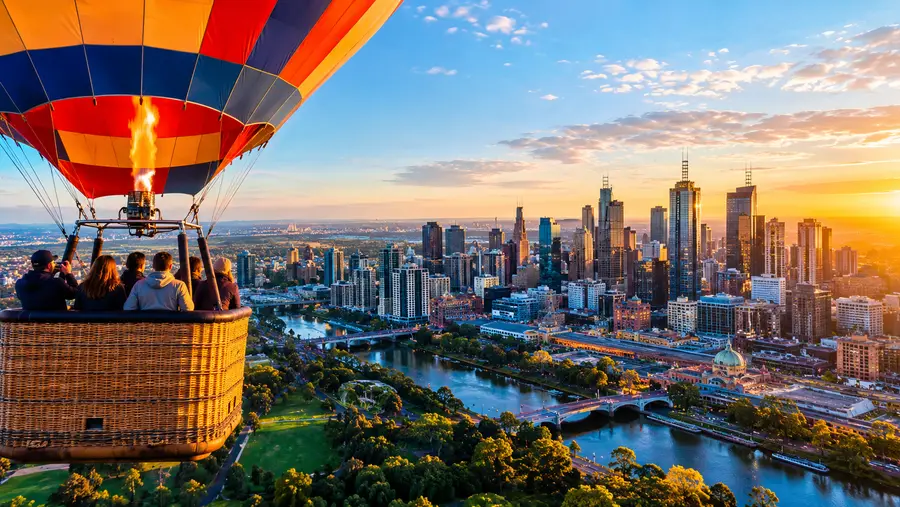
Most visitors assume the city flight stays parked right above the main shopping streets. In reality, you drift with the wind corridor. One morning you might float low right past the Melbourne Cricket Ground, catching reflections in the Yarra, while the next week a southern draft carries you out toward the northern suburbs over Preston and Brunswick, watching rows of Victorian terraces wake up.
What happens on morning hot air balloon rides Melbourne style
Your day starts in pitch blackness. You meet the crew at a designated hotel base, usually around an hour and a half before dawn. There is coffee, though nobody speaks much because everyone is shivering in beanies and rubbing sleep from their eyes. The chief pilot checks the latest Bureau of Meteorology soundings, lets loose a small helium test balloon into the darkness, and tracks it with a flashlight to see what the upper currents are doing at 1,000 feet.
Once a launch field is selected, you pile into minibuses. When you arrive at the park, the real work begins, and it is far more hands-on than a helicopter tour or scenic flight.
- Unrolling the fabric: The ground crew stretches hundreds of pounds of fabric along wet turf, and passengers are often invited to help pull out the crown line if they want to get involved.
- Cold inflation: Giant petrol-powered fans fire up, forcing thousands of cubic feet of cold ambient air into the envelope until it billows into a massive, horizontal whale on the grass.
- Hot inflation: The pilot ignites the primary burner with a sudden roar, heating the air inside; within two minutes, the entire envelope stands upright, towering ten stories above the trees.
- Boarding the basket: You scramble over the tall wicker sides via built-in foot holes, settling into your partitioned compartment while the basket tugs gently against the ground.
Pro tip: Wear an old pair of waterproof boots or leather walking shoes; launch fields in Melbourne parks are soaked with heavy dew at dawn, and wet socks before you even leave the ground will ruin your entire flight.
The liftoff is something people rarely anticipate accurately. There is no stomach drop, no jerk, and no feeling of acceleration like you get in an elevator or commercial jetliner. The earth simply drops away while you stand motionless. You look down, and suddenly the support vehicles look like plastic toys on the grass, and the morning traffic on the Monash Freeway is crawling along in complete, eerie silence.
Because you move at the exact speed of the wind, there is no wind chill in the basket. None. The air around you feels dead calm, interrupted only every thirty seconds by the fierce heat radiating down from the burner overhead onto your hat.
Book your hot air balloon melbourne experience:
Conditions, seasons, and why Melbourne hot air balloons are unique
Melbourne weather has a notorious reputation for swinging through four seasons in an afternoon, but ballooning operates on microscopic atmospheric shifts that happen only during transition hours. The reason hot air balloons melbourne operators fly exclusively at dawn is atmospheric stability. As the sun heats the ground during the day, thermal columns rise unevenly, generating turbulence and gusts that make landing a seven-story balloon unsafe. At first light, the atmosphere is calm, predictable, and settled into smooth thermal inversions.
Autumn, running from March through May, is arguably the finest period for ballooning in Victoria. Wind conditions tend to settle down, mornings are crisp and clear, and golden foliage blankets the parks along the Yarra. Winter offers razor-sharp visibility where you can spot Mount Macedon and the Dandenong Ranges with crystal clarity, though you will definitely feel the bite of a 4-degree morning. Summer brings warm, gentle sunrises, but meeting times can be as punishingly early as 4:00 AM.
Cancellations happen. They happen often, and you need to be prepared for that reality. If a front brings wind speeds over ten knots at surface level, or low cloud hangs below 800 feet, the pilot calls the flight off. Good operators will never push margins. It is frustrating to have your 5:00 AM trip rescheduled, but standing in a park wishing you were in the air is infinitely better than being in the air wishing you were on the ground.
Every landing is an unscripted adventure. Sometimes the pilot feathers the burner, sets the wicker down on a cricket oval with barely a scrape, and you step out onto dry grass. Other times, the ground wind picks up slightly, and you are told to assume the landing position - knees bent, back against the basket wall, hands holding internal rope handles. The basket touches down, tips on its side, and drags along the grass for ten yards before settling. It is totally normal, safe, and easily the most exciting part of the morning.
Practical hot air balloon information: what to wear, bring, and expect
Preparing for a flight requires a bit of common sense and dressing for two entirely different microclimates within an hour. On the ground at 5:30 AM, you will be cold. Up at 2,000 feet directly underneath a propane burner, your head will be baking while your feet remain chilly near the bottom of the wicker weave.
- Clothing layers: Dress in natural fibers like cotton or wool rather than synthetics; skip the heavy arctic ski parka and wear a warm fleece under a windproof jacket so you can strip a layer once the sun climbs.
- Headwear: Bring a baseball cap or beanie; the burner radiates genuine heat straight down onto your scalp, and a brim helps shield your eyes and head from radiant warmth.
- Footwear: Flat, closed-toe walking shoes or hiking boots are mandatory; avoid designer sneakers, sandals, or heels, as you will likely climb through wet paddocks or muddy parks.
- Camera gear: Secure everything with a wrist strap or neck harness; if you drop a smartphone or expensive lens over the side of the basket, there is zero chance of retrieving it intact.
- Baggage: Leave large backpacks and bulky bags in the chase van; basket space is tight, and you are only allowed to bring your camera, sunglasses, and personal essentials into the air.
After landing, the pack-up is another communal ritual. Squeezing several thousand cubic meters of air out of the envelope involves walking along the fabric, rolling it like a giant sleeping bag, and wrestling it back into its canvas sack. Once the gear is strapped onto the trailer, groups traditionally head back to the hotel for a cooked breakfast and glasses of sparkling wine, an old French custom dating back to eighteenth-century aeronauts proving to frightened farmers that they were human beings, not descending demons.
Frequently Asked Questions about hot air balloon information
How long does the entire Melbourne ballooning experience take?
The actual time spent floating in the air is usually between 50 and 65 minutes depending on landing conditions. However, the complete morning experience, from the pre-dawn check-in and travel to the launch field through pack-up and celebratory breakfast, lasts roughly four to five hours.
Will I get motion sickness while floating in the basket?
Motion sickness is exceptionally rare on a hot air balloon. Because the craft moves seamlessly with the ambient wind current, there is no physical sensation of speed, sway, or turbulence. It feels like standing on a solid observation balcony that simply happens to be moving slowly across the terrain.
What happens if the weather cancels my scheduled morning flight?
If wind or rain makes flying unsafe, the pilot will cancel the flight via text or morning announcement. Reputable operators allow you to rebook for another available date or will process a refund depending on your original ticket terms. If you are visiting Melbourne on a short holiday, book your flight for the first morning of your trip so you have buffer days left to reschedule.
Quick Reference
- Flight time: roughly 1 hour in the air
- Total time commitment: 4 to 5 hours
- Meeting time: between 4:00 AM and 5:30 AM
- Best season: March to May (calm winds, autumn colors)
- Dress code: layers, flat boots, warm cap
Book your hot air balloon melbourne experience:
Before You Set Your Alarm
Hot air ballooning over Melbourne is not a casual, turn-up-and-snap-a-selfie tourist activity. It demands an early wake-up call, cold toes, and a willingness to roll with the whims of morning wind patterns. Yet, the moment the burner pauses and you drift completely silent over the spire of the Arts Centre or watch sunrise illuminate the bends of the Yarra, the lost sleep ceases to matter. Book early, keep your schedule flexible across a couple of mornings, and pack warm socks - floating over this city as it wakes is an experience that stays with you long after the landing bump.
Read more about hot air balloon melbourne.