Is Hot Air Ballooning in Melbourne Safe
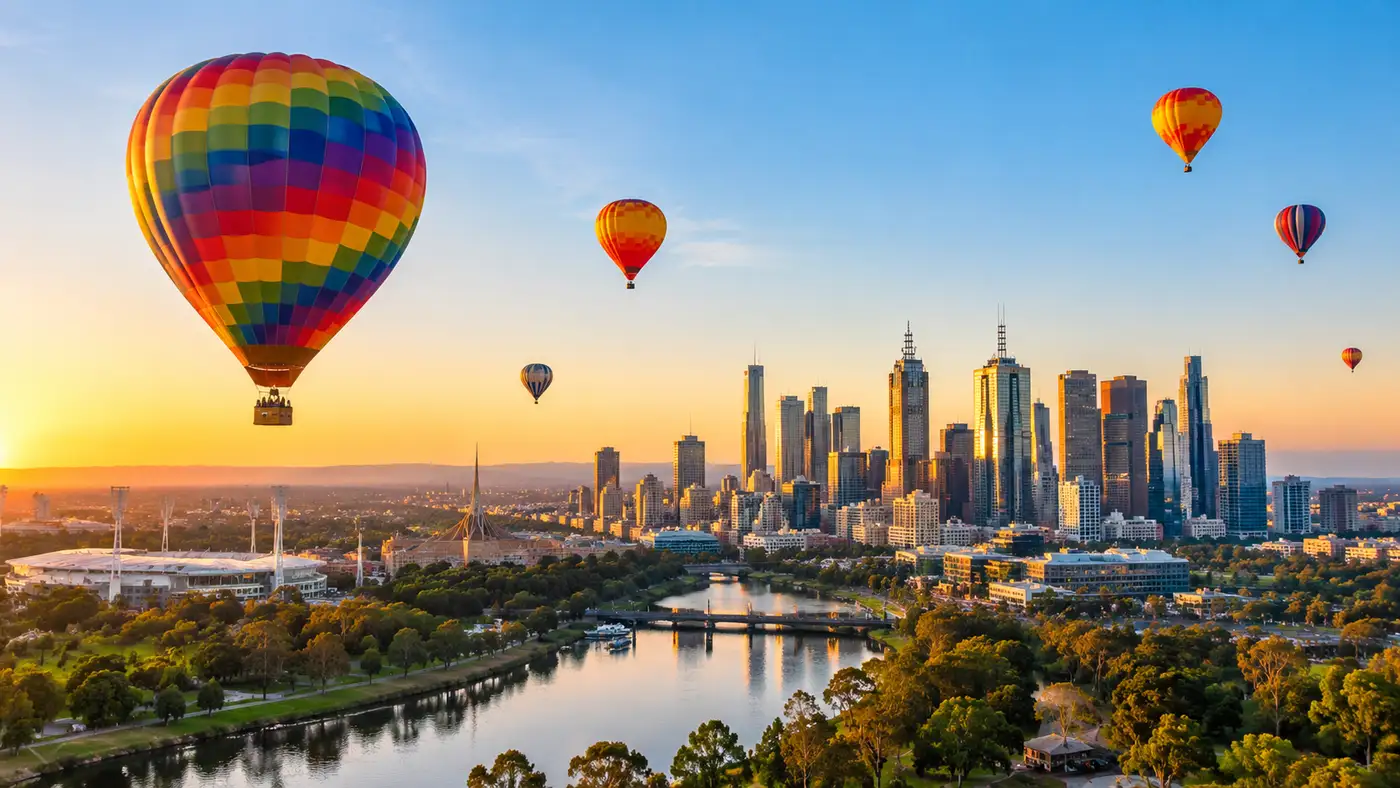
Standing in a chilly park in Richmond at 5:15 in the morning while giant burners roar overhead tends to bring one question straight to mind: are hot air balloons safe, or have I made an enormous mistake? It is a raw sensation. You look up at hundreds of yards of nylon fabric, a wicker basket that looks like a giant picnic hamper, and suddenly you remember that you are about to float 2,500 feet over suburban Melbourne without an engine or a steering wheel.
My first flight was out near the Yarra Valley on a damp April morning, and my hands were sweating inside my fleece gloves. You wonder how safe is hot air ballooning when the pilot is casually checking wind drift by releasing a small toy balloon filled with helium. Yet behind that old-fashioned charm lies some of the most rigid civil aviation oversight in the world. If you are debating booking a sunrise flight over the CBD towers or the rolling vineyards, here is the honest, unvarnished truth about commercial balloon safety in Victoria.
Book your hot air balloon melbourne experience:
Regulations and Oversight: How Safe Is a Hot Air Balloon in Victoria?
Australia treats hot air balloons with the same legal scrutiny as twin-engine commercial airplanes. The Civil Aviation Safety Authority, known universally as CASA, regulates every commercial operator running flights out of Melbourne. They do not treat these operations as county fair novelties. Under CASA's Part 131 regulations, operators must hold an Air Operator's Certificate, which means their maintenance, flight planning, drug testing, and pilot training follow strict federal protocols.
A pilot cannot simply buy an envelope on eBay and start taking paying passengers up for cash. To fly commercially in Australia, a pilot must hold a Commercial Pilot Licence specifically for balloons, which demands hundreds of hours of logged flight time, grueling medical exams every 12 months, and regular flight reviews under demanding conditions. Most senior pilots operating above Melbourne have logged between 1,500 and 4,000 hours in the air. When you step into a basket, the person working the blast valve has spent decades learning to read invisible thermal currents and tricky city wind shears.
Then there is the hardware itself. You might look at a basket and think it looks primitive, but woven wicker remains the gold standard for a reason. Wicker flexes. When a balloon lands with some forward momentum, the basket absorbs the kinetic energy through that flexible weave, protecting the passengers inside far better than rigid aluminum or carbon fiber ever could. Envelopes are made from specialized ripstop nylon, coated with polyurethane or silicone to handle blistering heat, and every single seam is inspected with microscopic attention every 100 flight hours or 12 months.
Note: Commercial balloon operators in Australia are legally required to carry comprehensive third-party passenger liability insurance. You can verify any operator's legitimacy by asking to see their current CASA Air Operator's Certificate number before booking.
Real Risk vs Perceived Fear: Are Hot Air Balloons Dangerous?
People often ask me how dangerous is hot air ballooning compared to driving down the Monash Freeway or hopping on an interstate flight. Fear of heights is instinctive. Your brain screams that dangling from a bag of hot air is unnatural, which makes the activity feel far more perilous than it actually is. Statistically, commercial ballooning is among the safest forms of air travel in existence.
Over the last 30 years in Australia, commercial ballooning has maintained an exceptional safety record. The vast majority of incidents reported to the Australian Transport Safety Bureau involve minor sprains during bumpy landings on windy mornings, rather than mid-air catastrophies. International travelers often ask local guides, "危険ですか?" (is it dangerous?), especially when they see the flames shooting up into the fabric. The answer is consistently reassuring: catastrophic structural failures in certified commercial balloons are vanishingly rare.
| Aviation Category | Regulatory Body | Fatality Rate | Primary Risk Factor |
|---|---|---|---|
| Commercial Hot Air Ballooning | CASA (Australia) | 0.08 | Hard landings, sudden wind gusts |
| Commercial Airliner Flights | CASA / ICAO | 0.02 | Mid-air turbulence, runway incidents |
| General Aviation (Light Planes) | CASA | 1.25 | Engine failure, pilot disorientation |
| Skydiving Operations | APF / CASA | 0.45 | Canopy collision, gear malfunction |
When people ask whether are hot air balloon safe, they are usually picturing powerline collisions or mid-air deflations. Melbourne pilots plot their launch sites based on the prevailing morning breeze, deliberately choosing departure points like Moorabbin, Albert Park, or Yarra Bend that give them miles of open emergency landing options downwind. If a burner valve fails, they switch to a secondary redundant system. Every commercial passenger balloon flies with dual burners, independent fuel lines, and separate liquid propane tanks. If one system clogs or loses pressure, the second unit delivers full lifting power instantly.
You can read more about how pilots weigh emotional panic against physical comfort in our guide on is hot air ballooning in Melbourne scary or relaxing.
Weather Factors: Why Morning Flights Get Canceled
Nothing annoys a tourist more than an alarm going off at 3:45 am, driving out to an unlit oval, and finding out the flight is canceled. I have had it happen twice in five years. You stand there clutching a flat white, staring at a sky that looks calm and clear, wondering why on earth the pilot called it off.
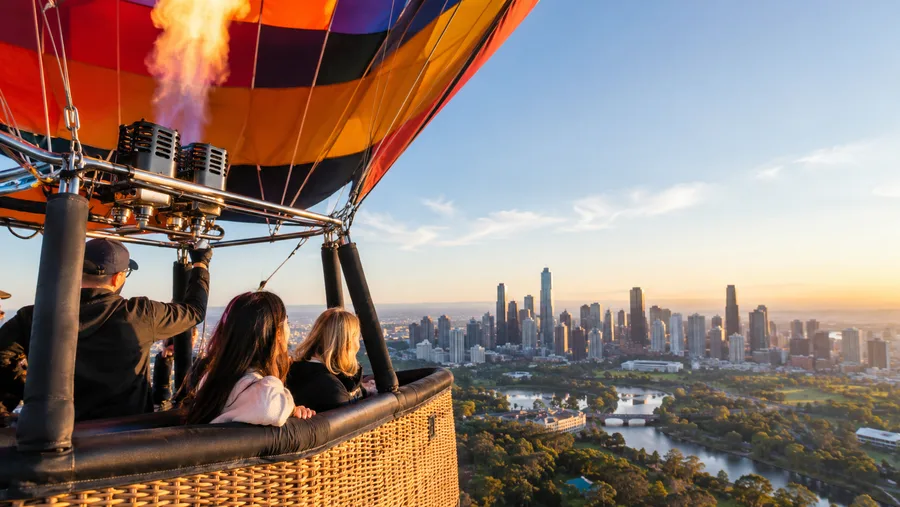
Pilots do not cancel flights to ruin your holiday. They do it because hot air balloons have zero forward propulsion. They travel entirely at the mercy of the wind. In Melbourne, weather is notoriously temperamental. Surface winds might feel gentle on your cheek at ground level, but 800 feet above the MCG, a 22-knot wind shear could be screaming off Port Phillip Bay. If the pilot cannot guarantee a safe approach speed into an open park or sports oval on the other side of the city, the flight simply does not launch.
- Maximum surface wind: Commercial flights rarely launch if surface winds exceed 8 to 10 knots at dawn.
- Thermal activity: Flights must launch at sunrise because midday sun warms the earth, producing chaotic rising thermals that can toss an envelope unpredictably.
- Visibility minimums: Pilots must maintain clear visual sight of terrain and avoid cloud decks lower than 1,000 feet.
- Wind shear boundaries: Rapid changes in wind direction across different altitude layers can spin a basket during descent, requiring immediate abort procedures.
If you want to understand the exact mechanics behind how the Bureau of Meteorology informs these calls, take a look at our breakdown of weather conditions for hot air ballooning in Melbourne. A cancellation is the best proof you could possibly get that your pilot values your survival over a quick ticket sale.
Pro tip: Schedule your balloon ride for the first morning of your trip to Melbourne. If the flight gets scrubbed due to high winds, reliable operators will roll your booking over to the following sunrise without penalty.
Book your hot air balloon melbourne experience:
What Actually Happens During a Landing?
The landing is the only part of a balloon flight where things get physical. Floating along at 1,500 feet is completely serene, almost motionless, because you are moving with the air mass rather than pushing against it. There is no wind in your face. The basket does not sway. But when that basket touches the grass, gravity catches back up with you.
There are two types of landings, and every passenger needs to know the difference. On a dead-calm morning, you get what pilots call a "stand-up landing." The basket brushes the pasture grass, the burner gives a short burst of heat to settle the weight, and the basket comes to rest as gently as an elevator reaching the ground floor. You stay standing, chat with your neighbor, and wait for the retrieve crew to hook up the tie-down ropes.
On breezier mornings, you will experience a "lay-over" or drag landing. This is where uninformed passengers panic and start wondering is a hot air balloon safe after all. During a lay-over landing, the basket contacts the ground at roughly 10 to 14 knots. The wicker tilts on its side by design, dragging across the wet grass for 15 to 30 meters before coming to a stop. It looks dramatic from the outside, but inside the padded compartments, it feels like sliding onto a soft couch.
Before every descent, the pilot drills the flight crew on the proper landing position. You do not stand upright with locked knees. You face backward, grip the internal rope handles tightly, bend your knees deeply like a downhill skier, and keep your head tucked back against the padded basket wall. As long as you stay in that tuck until the pilot says the words "all clear," the chance of an ankle roll or bumped shin is tiny.
Choosing a Safe Operator in Melbourne and the Yarra Valley
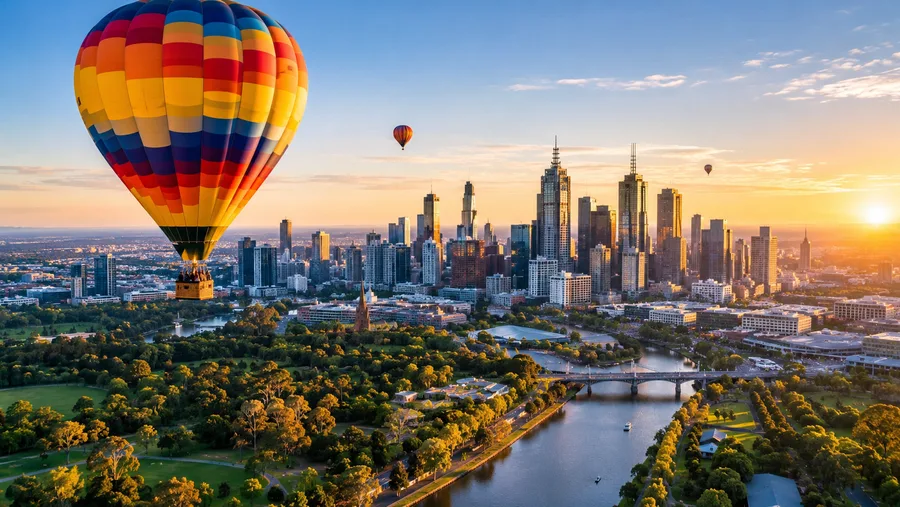
Not all flight experiences are built the same, though the safety baseline remains high thanks to CASA. When you are looking to book, you want to filter out discount brokers who cut corners on support vehicles or fly worn-out equipment. Melbourne has three or four long-standing operators who have flown the local airspace for over 25 years.
- Fleet age and rotation: Inquire how often envelopes are retired; premium operators replace fabric well before the 500-flight-hour mark.
- Crew-to-passenger ratios: Look for flights that provide at least two ground crew members alongside the pilot to manage safe inflation and pack-down.
- Pilot tenure: Check if the chief pilot has local Melbourne airspace experience, which requires navigating urban air corridors alongside Essendon and Tullamarine air traffic control.
- Transparent cancelation policies: A dependable operator will offer straightforward rebooking vouchers or full refunds when bad weather keeps the fleet grounded.
I always tell friends that paying an extra $40 or $60 for an established Victorian company with a flawless local record is money well spent. A good operator maintains their own maintenance hangar, employs full-time licensed mechanics, and never rushes an inflation when ground wind conditions look marginal.
Frequently Asked Questions about are hot air balloons safe
What happens if the burner goes out mid-flight?
Commercial balloons are built with redundant burner systems. Each basket carries at least two completely separate burners connected to individual fuel tanks. If one burner malfunctions or suffers a pilot light flameout, the pilot instantly opens the secondary burner system. The hot air already trapped inside the envelope gives the pilot several minutes of buoyancy even if both burners were temporarily disabled.
Can a hot air balloon pop in mid-air?
No, an envelope cannot pop like a party balloon. The fabric is open at the bottom throat, meaning the air pressure inside matches the air pressure outside. It is essentially an open chimney filled with warm air. Even if a tear were to develop in the fabric, the heavy-duty load tapes sewn in a grid throughout the nylon prevent rips from expanding, allowing the balloon to descend slowly under control.
Are Melbourne city flights more dangerous than countryside flights?
City flights require tighter flight path control due to buildings, roadways, and restricted airspace near Melbourne Airport. Pilots compensate for this by maintaining higher altitude clearances and launching only when the wind direction guarantees a clean trajectory toward designated parks like Fawkner Park or Albert Park reserve.
Quick Reference
- Regulated federally by CASA Part 131
- Dual burner redundancies on all passenger baskets
- Balloons fly only in winds under 10 knots
- Lay-over landings are standard design, not crashes
- Over 30 years of safe commercial history in Victoria
Book your hot air balloon melbourne experience:
The Bottom Line
Climbing into a hot air balloon over Melbourne does require a leap of faith. You are surrendering the illusion of control to the morning breeze, trusting an experienced pilot and a giant dome of heated air to float you gently past skyscraper spires and silent suburban streets. It is normal for your stomach to flutter when the ground drops away. But make no mistake: commercial ballooning in Australia is a tightly managed, heavily audited branch of civil aviation with an enviable safety record. If the pilot says conditions are clear to launch, tuck your fears away, climb over the wicker rim, and enjoy the absolute finest sunrise view in Victoria.
Read more about hot air balloon melbourne.